

The Javalambre Astrophysical Observatory renews its status as a Spanish Singular Scientific and Technical Infrastructure (ICTS) through 2028
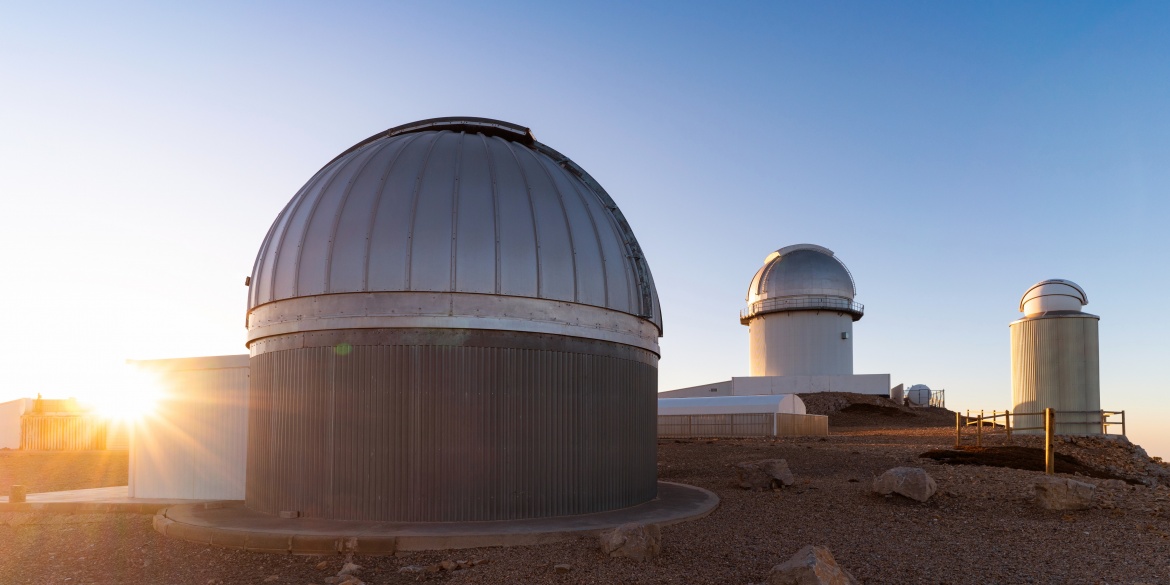
The Javalambre Astrophysical Observatory renews its status as a Spanish Singular Scientific and Technical Infrastructure (ICTS) through 2028
The Javalambre Astrophysical Observatory will remain, at least until 2028, on the national map that brings together Spain’s leading scientific and technical infrastructures. The decision was approved by the Council for Scientific, Technological and Innovation Policy, chaired by the Minister of Science, Innovation and Universities, Diana Morant.
The facility, located in Arcos de las Salinas, was first included in the ICTS map in October 2014. As on that occasion, the Observatory has once again successfully passed the evaluation carried out by the Advisory Committee on Singular Infrastructures (CAIS), which assesses the strategic plans and achievements of facilities that are exceptional in their field.
During the evaluation process, CAIS highlighted as the OAJ’s main achievements the full commissioning of the JPCam instrument and the start of the J-PAS survey. Another key milestone was the opening of the JST250 telescope to the international scientific community, with access to observing time through open and competitive calls.
In addition to the JAST80 and JST250 telescopes and their scientific instrumentation, the Data Processing and Archiving Unit (UPAD) is an integral part of the ICTS of the Centro de Estudios de Física del Cosmos de Aragón. This unit is responsible for storing, processing and managing the data collected nightly at the OAJ; it includes the hardware required to process the images and to provide the scientific community with access to all this information.
ICTS share three core characteristics: they are publicly owned infrastructures, they are unique, and they are open to competitive access for users from the entire research community. Their evaluation considers objectives, investment, management, as well as scientific output and performance. In total, the new 2025–2028 ICTS map has selected 28 infrastructures across Spain.
ICTS act as hubs for the transmission, exchange and preservation of knowledge, technology transfer and the promotion of innovation. They span areas such as marine and environmental sciences, biosciences and health, energy and materials, astronomy, digital technologies, and social sciences and humanities. Between 2021 and 2024, ICTS supported more than 9,000 scientific projects and employed nearly 2,500 professionals.
From an Aragonese perspective, the new map recognises the work of six ICTS. In addition to the Javalambre Astrophysical Observatory, these include the Canfranc Underground Laboratory and the Advanced Microscopy Laboratory. The list is completed by three nodes of distributed ICTS: the UNIZAR Computing and Data node, SCAYLE, and NANBIOSIS, the Integrated Node in Aragón.
Within the Astronomy Infrastructure Network (RIA) are the Gran Telescopio de Canarias, the IRAM 30-metre radio telescope, and four observatories: those of the Canary Islands, Yebes, Calar Alto, and the Javalambre Astrophysical Observatory. This network also serves as a forum for knowledge exchange and collaboration between the regions of the Canary Islands, Andalusia, Castilla-La Mancha and Aragón.