

J-PLUS reveals how galaxy mass shapes star formation in the local Universe
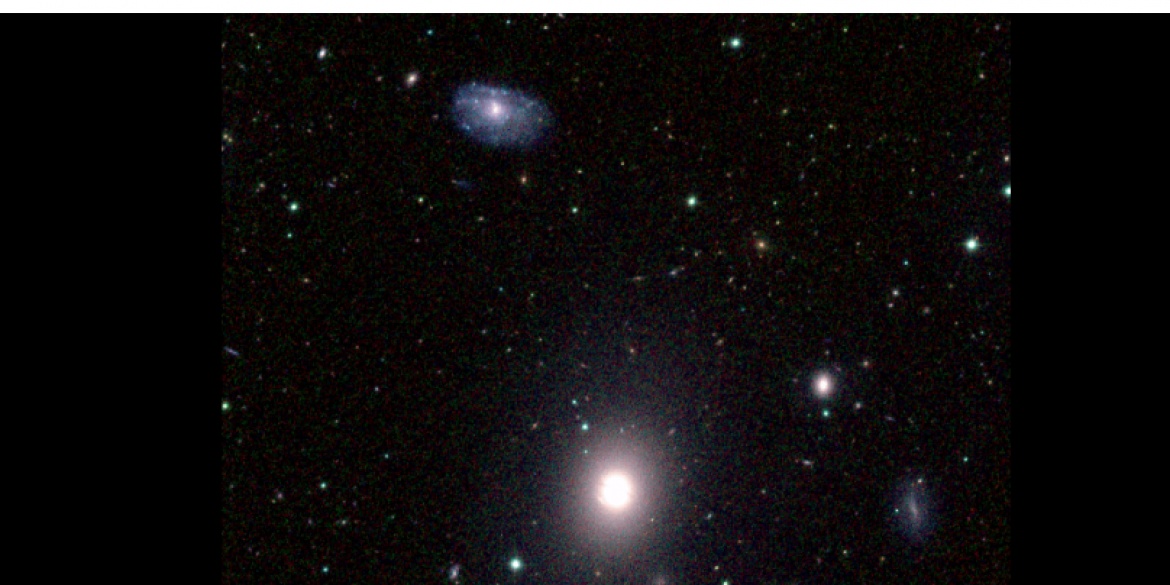
J-PLUS reveals how galaxy mass shapes star formation in the local Universe
Understanding how galaxies form and evolve requires identifying the physical processes that regulate their ability to create new stars. One of the most effective approaches is to determine how many galaxies are actively forming stars and how many have stopped doing so, and to analyse how this balance changes with galaxy mass. This simple measurement encapsulates many of the key mechanisms involved in galaxy evolution, including gas accretion, supernova feedback and environmental effects, providing a powerful way to assess how these processes affect galaxies of different masses.
The study is based on the third data release of J-PLUS, which has mapped approximately 3,000 square degrees of the sky using a unique set of five broad-band and seven narrow-band optical filters. These observations enable astronomers to estimate the current star formation activity of galaxies and distinguish between star-forming and passive systems. J-PLUS also provides robust measurements of stellar mass, the combined mass of all the stars contained within a galaxy. The sample analysed in this work includes nearly 890,000 galaxies located within the local Universe, at distances of less than 2.5 billion light-years.
Using the Milky Way as a reference, the researchers found a strong dependence of galaxy activity on stellar mass. Among galaxies fifty times less massive than the Milky Way, only one in five is passive. However, the fraction of passive galaxies rises dramatically with increasing mass. For galaxies twice as massive as the Milky Way, the passive fraction reaches 95%. Taken together, the results indicate that while only half of local galaxies have stopped forming stars, these systems account for approximately 75% of the total stellar mass in the nearby Universe.
The authors emphasise that this study provides the foundation for future investigations into the role of environment in galaxy evolution. In particular, they aim to determine how the fraction of passive galaxies changes depending on whether a galaxy is isolated or belongs to a group or cluster. Such analyses will help quantify the relative importance of internal processes linked to galaxy mass and external processes driven by the surrounding environment in shutting down star formation.
To facilitate access to enhanced data products from the J-PLUS and J-PAS surveys, the Javalambre Astrophysical Observatory is developing, validating and publishing High Added Value Catalogues (CAVA), which provide physical properties for astronomical sources observed by the ICTS Javalambre Astrophysical Observatory. This work has been carried out within the framework of the J-CAVA project, funded by the European Union – NextGenerationEU under Spain's Recovery, Transformation and Resilience Plan.
This research has also received funding from Aragón Research Group E16_23 and from project PID2021-124918NB-C44, funded by the Spanish Ministry of Science, Innovation and Universities and the State Research Agency (MCIN/AEI/10.13039/501100011033/FEDER, EU).