

Andromeda XXXVI identified as one of the faintest dwarf galaxies surrounding Andromeda
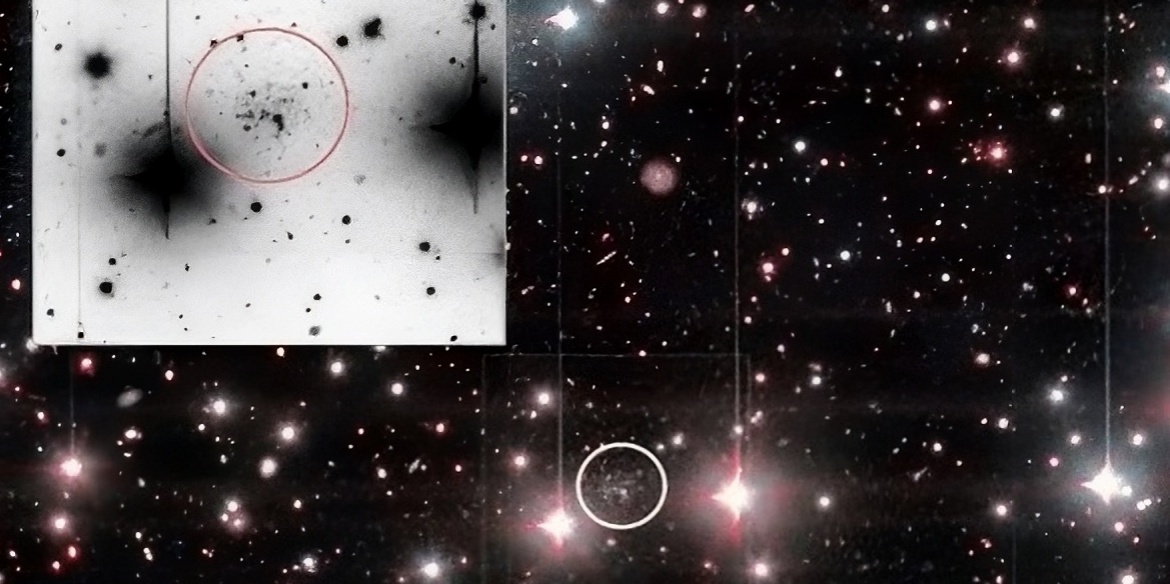
Andromeda XXXVI identified as one of the faintest dwarf galaxies surrounding Andromeda
Ultra-faint dwarf galaxies are the smallest and faintest galactic systems known. Formed during the earliest stages of the Universe and dominated by dark matter, they constitute genuine cosmic fossils that provide a unique opportunity to study how the first galaxies formed and to test models of the nature of dark matter.
A study led by Joanna Sakowska, from the Institute of Astrophysics of Andalusia (IAA-CSIC), and David Martínez-Delgado, an ARAID researcher at CEFCA, has documented the discovery of a new ultra-faint dwarf galaxy in the vicinity of Andromeda (M31), the Milky Way’s nearest large galactic neighbour.
Named Andromeda XXXVI (And XXXVI), the galaxy appears to be part of the system of satellites orbiting Andromeda, according to the analysis carried out by the research team. The study suggests that it is a very old galaxy, around 12.5 billion years old, and extremely poor in heavy elements. However, a precise determination of its properties will require observations with space telescopes such as Hubble, which will allow more accurate measurements of its distance, age, and composition.
A laboratory for studying galaxy formation
The Andromeda Galaxy, located about 2.5 million light-years from Earth, is the nearest giant spiral galaxy to the Milky Way. Like our own galaxy, it is surrounded by numerous satellite galaxies, small companions that orbit it under the influence of gravity.
These galaxies constitute valuable laboratories for studying the formation and evolution of the first structures in the Universe. They also play a key role in testing the standard cosmological model, known as ΛCDM (Lambda Cold Dark Matter), which describes the formation of galaxies within dark matter halos following the Big Bang. According to some estimates based on this model, Andromeda could host around 90 satellite galaxies, many more than those identified so far.
The discovery of Andromeda XXXVI
Andromeda XXXVI was first identified by astrophotographer and amateur astronomer Giuseppe Donatiello while examining images from the Pan-Andromeda Archaeological Survey (PAndAS), carried out with the CFHT telescope in Hawaii. The object appeared as a faint patch in which some individual stars could already be distinguished, leading Donatiello to include it in a list of candidate galaxies that he sent to Joanna Sakowska (IAA-CSIC) and David Martínez-Delgado (CEFCA) for further analysis.
According to David Martínez-Delgado, an ARAID researcher at CEFCA, And XXXVI is the fourth dwarf galaxy discovered in the surroundings of Andromeda within this project over the last decade. This finding highlights the enormous potential contribution of amateur astronomers when provided with appropriate training and access, from their own homes, to public images from large-scale sky surveys. “Our list of possible candidates for these ‘missing galaxies’ already exceeds a dozen, and we are eager to obtain observing time on telescopes with apertures between 8 and 10 metres in order to confirm them,” says Martínez-Delgado.
After selecting And XXXVI for a more detailed study, the team obtained observing time at the Gran Telescopio Canarias (GTC), where they used the OSIRIS+ instrument, led by the Institute of Astrophysics of the Canary Islands (IAC), to obtain significantly deeper images. These observations made it possible to distinguish individual stars within the galaxy’s faint diffuse light. However, Andromeda XXXVI proved to be an extraordinarily faint object: the research team could identify only about 46 stars associated with it.
To overcome this limitation, the team compared the observed stars with theoretical models of stellar evolution known as isochrones, which predict the brightness and colour that stars of the same age and chemical composition should have. “Assuming that And XXXVI is located at approximately the same distance as Andromeda, the observations and the models are in remarkable agreement, indicating that it is very likely a satellite galaxy of M31,” notes Sakowska.
Discovering ultra-faint dwarf galaxies is extremely challenging: their small size and low luminosity mean that they can only be detected within our local cosmic neighbourhood. “Each of these discoveries offers us an exceptional opportunity to study how galaxies form at such extreme mass scales, as well as to investigate the distribution of dark matter. For this reason, we expect Andromeda XXXVI to remain the subject of study in the coming years,” concludes Joanna Sakowska (IAA-CSIC).